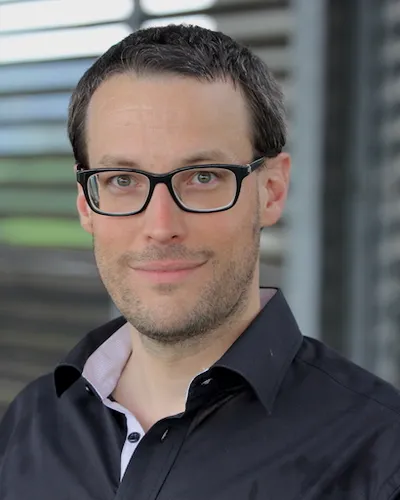
Ivo F. Sbalzarini
Professor and head of the group

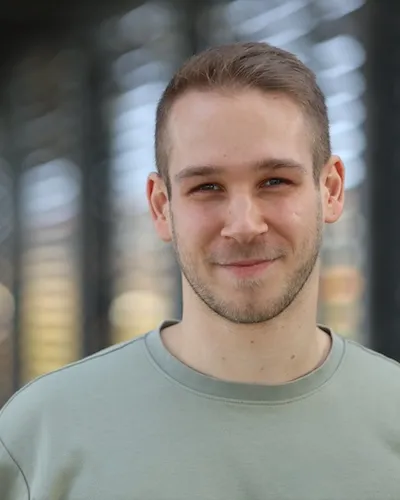
Dominik Sturm has been a PhD student in the MOSAIC group between March 2021 and May 2026. Since then, he is a wrap-up postdoc in the group.
Dominik studied Computer Science at the Technische Universität Dresden and obtained his MSc in Computer Science in 2021. In his Master’s thesis titled “Data-Driven Mechanistic Modeling of Biological Processes” at the MOSAIC Group with Dr. Suryanarayana Maddu, Prof. Dr. Ivo F. Sbalzarini and Prof. Dr. Bjoern Andres he investigated strategies to alleviate numerical problems during the training of physics-informed neural networks (PINNs). This enabled the data-driven modeling of turbulence in active fluids by PINNs. The results have been published as part of a journal article in IOP Machine Learning: Science and Technology.
Dominik has several years of professional experience as a Software Engineer. He also was a research assistant with the Fraunhofer Institute for Machine Tools and Forming Technology (IWU), where he developed CNN-based methods for outlier detection in production processes. He also previously worked with the MOSAIC group at CSBD, where he helped with the implementation of several machine-learning projects around data-driven modeling and simulation of living systems.
In our group, Dominik develops statistical learning and stochastic generative models to understand and quantify the spatial organization of living systems.
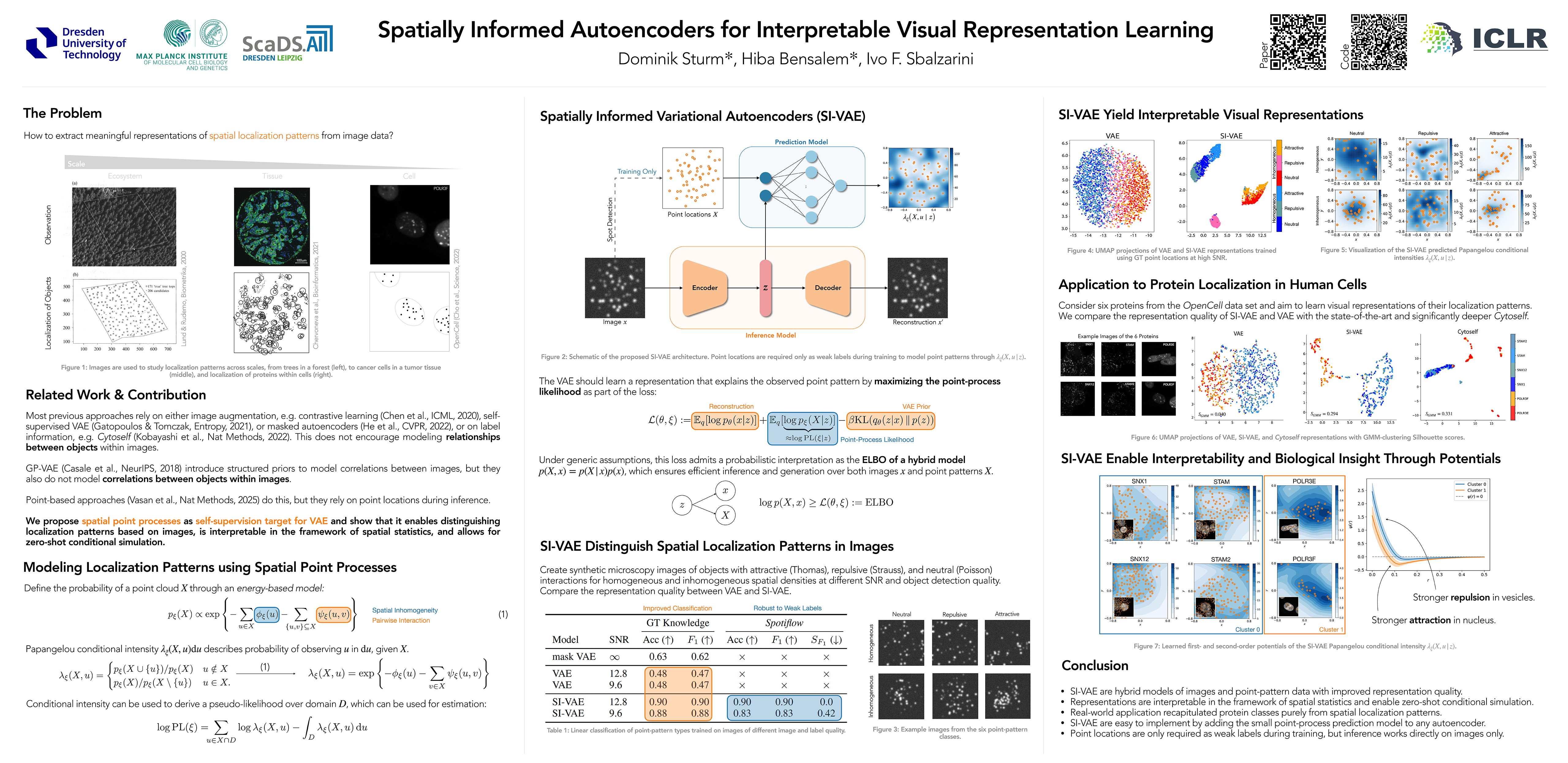
D. Sturm, H. Bensalem and I. F. Sbalzarini
International Conference on Learning Representations (ICLR), 2026
D. Sturm, S. Maddu and I. F. Sbalzarini
Proc. R. Soc. A 480(2304):20230532, 2024
S. Maddu, D. Sturm, B. L. Cheeseman, C. L. Müller and I. F. Sbalzarini
Sci. Rep 13:12787, 2023
S. Maddu, D. Sturm, C. L. Müller and I. F. Sbalzarini
Mach. Learn.: Sci. Technol 3:015026, 2022
S. Maddu, D. Sturm, B. L. Cheeseman, C. L. Müller and I. F. Sbalzarini
Proc. 14th World Congress on Computational Mechanics (WCCM), 1–6, 2021
D. Sturm
Technische Universität Dresden, Faculty of Computer Science, 2021 (Master thesis)
D. Sturm
MOSAIC technical report, MOSAIC Group, TU Dresden, 2019